
Thailand Visa-Free Stay Cut to 30 Days: What Changed and What to Do
By The All Things Thailand team ·
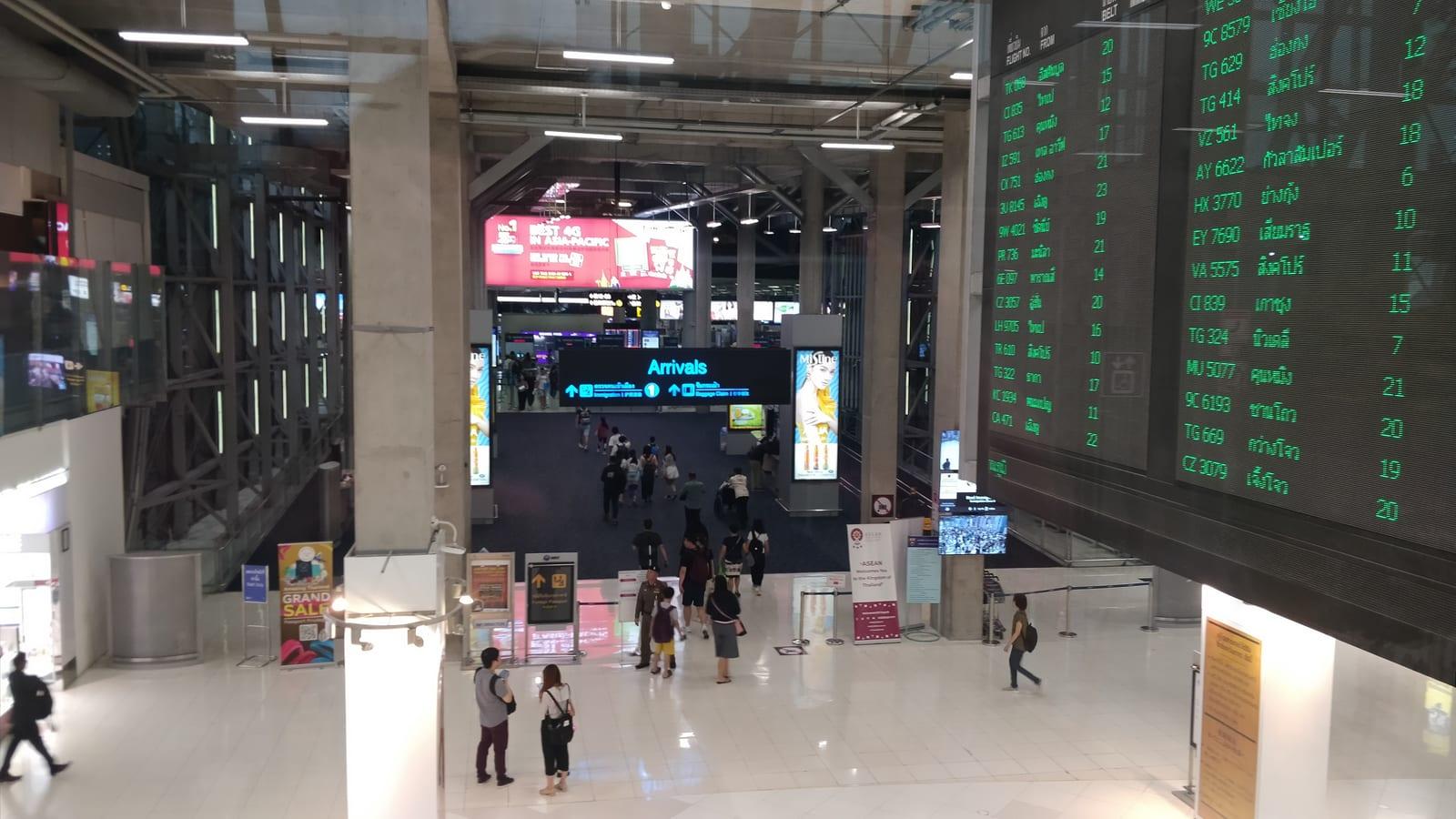
Photo: Exec8, CC BY-SA
If you planned a two-month Thai holiday on the old visa-free rules, it's time to check your dates. Since 15 September 2026, most visitors who don't need a visa can stay for 30 days, not 60. The change is official, and it applies to every new arrival.
We live in Bangkok and get asked about this constantly. So here is the plain-English version: what changed, who it affects, and what to do if 30 days isn't enough.
Quick facts
- What changed: the 60-day visa exemption ended and was replaced by a new 30-day exemption for tourism.
- Start date: 15 September 2026, for anyone entering Thailand on or after that day.
- Official announcement: published by the Ministry of Interior in the Royal Gazette on 31 August 2026.
- Who gets 30 days: passport holders from 60 countries and territories, including the US, UK, Canada, Australia, New Zealand, India, Japan and most of Europe.
- Who gets 15 days: Mauritius and Seychelles.
- Visa on arrival: Azerbaijan, Belarus and Serbia, at designated checkpoints.
- By land: the exemption can generally be used no more than twice per calendar year.
What actually changed on 15 September
Since July 2024, visitors from 93 countries and territories could arrive without a visa and stay up to 60 days. That scheme has now ended. In its place is a shorter, simpler system with three groups.
The biggest group gets a 30-day visa exemption for tourism. A second group of two countries gets 15 days. A third group of three countries can get a visa on arrival at designated immigration checkpoints. Each country sits in one group only.
The overall list is also shorter. It has gone from 93 countries and territories to 60 for the 30-day scheme. If your country isn't on it, don't assume you need a visa yet. Read the section on bilateral agreements below first.
Which countries get 30 days
According to the Tourism Authority of Thailand, these 60 countries and territories qualify for the 30-day exemption:
| Region | Countries and territories |
| Americas | Canada, United States |
| Europe | Austria, Belgium, Bulgaria, Croatia, Cyprus, Czech Republic, Denmark, Estonia, Finland, France, Germany, Greece, Hungary, Iceland, Ireland, Italy, Latvia, Liechtenstein, Lithuania, Luxembourg, Malta, Netherlands, Norway, Poland, Portugal, Romania, Slovakia, Slovenia, Spain, Sweden, Switzerland, Türkiye, Ukraine, United Kingdom |
| Asia | Bhutan, Brunei Darussalam, India, Indonesia, Japan, Kyrgyzstan, Malaysia, Maldives, Philippines, Singapore, Taiwan |
| Middle East | Bahrain, Israel, Jordan, Kuwait, Oman, Qatar, Saudi Arabia, United Arab Emirates |
| Oceania and Africa | Australia, Fiji, New Zealand, South Africa |
| Caucasus | Georgia |
A few things stand out. All 27 EU countries are treated the same way. India has moved from visa on arrival to the 30-day exemption, which makes things easier for Indian travellers.
Not on the list? Check bilateral agreements
Thailand also has separate visa agreements with some countries. These are not part of the new list, and they still apply. Depending on the agreement, they allow stays of 90, 30 or 14 days.
So if your country is missing from the table, check the Thai embassy website for your country before you apply for a visa. You may still be able to travel visa-free under an older agreement.
What this means for you
For most holidaymakers, very little changes. A typical Thailand trip is two to three weeks, which fits comfortably inside 30 days. Just count your days carefully, including your arrival day.
The change matters most if you are one of these travellers:
- Long-stay holidaymakers who planned five to eight weeks on the old 60-day rule.
- Snowbirds and retirees who spend the cool season here without a long-stay visa.
- Digital nomads who used visa-free entry while working remotely.
- Business visitors coming for meetings, conferences or short work trips.
- Border runners who left by land to restart their stay.
Already in Thailand?
If you entered on the 60-day exemption before 15 September 2026, you are not affected. Immigration law firms Fragomen and Newland Chase both report that you can stay for the full period stamped on entry. The new rules apply to entries from 15 September onwards.
Coming for business?
The new 30-day exemption is described as being for tourism. According to Fragomen and Newland Chase, business activities such as meetings and conferences now generally need a Non-Immigrant B visa arranged before you travel. Holders of an APEC Business Travel Card are an exception. If work is involved, check with your employer or an immigration adviser first.
The land-border limit
If you plan to arrive overland, for example from Malaysia, Laos or Cambodia, there is an extra rule. You can generally use the visa exemption at a land border no more than twice per calendar year.
There are exceptions. TAT says the limit doesn't apply to citizens of Malaysia, Brunei, Indonesia and Singapore. Arriving by air has no fixed yearly limit, but the immigration officer always decides. Frequent visitors may be asked about the purpose of their trips.
How to stay longer than 30 days
If you need more time, plan it before you fly. Turning up and hoping to sort it out later is risky. These are the main options to look into:
- A tourist visa. Apply in advance through Thailand's official e-visa website for a longer tourist stay.
- The Destination Thailand Visa (DTV). Designed for remote workers and people doing longer activities such as Muay Thai or cooking courses.
- A Non-Immigrant visa. For business, study, retirement or family reasons, with its own requirements.
- An extension in Thailand. Some immigration advisers report that a single extension may still be possible at a local immigration office, depending on nationality. This hasn't been confirmed in the official announcements, so ask your local office before you rely on it.
Overstaying is never worth it. Thailand charges a fine for every day you overstay, and longer overstays can lead to a ban on returning.
Before you fly: a short checklist
- Check your nationality's group on the official list: 30 days, 15 days, visa on arrival, or a bilateral agreement.
- Count your days. Book your flight out within your permitted stay.
- Keep proof of your onward or return flight handy at the airport.
- Complete the Thailand Digital Arrival Card (TDAC) online before you arrive.
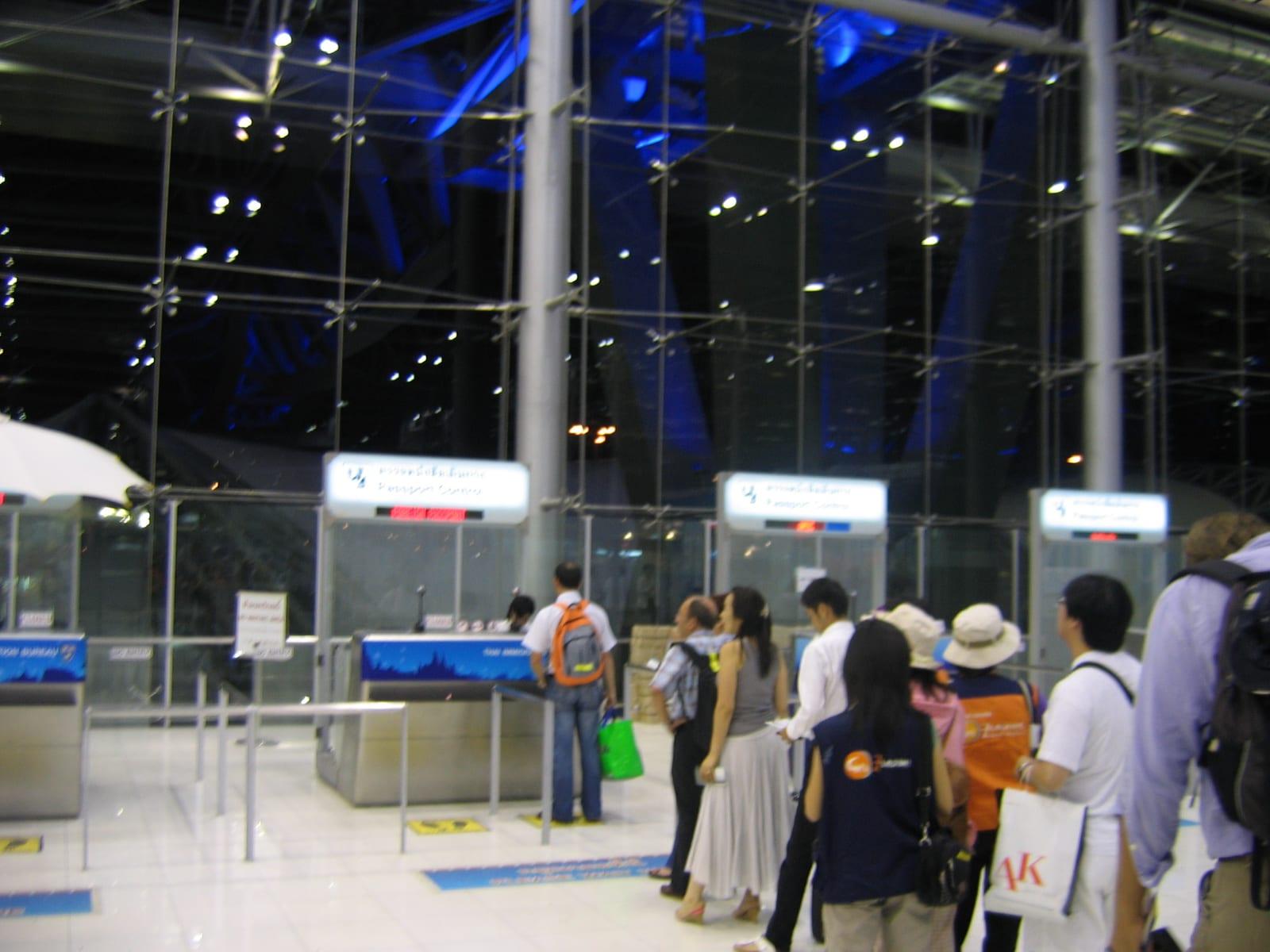
- Arriving at Suvarnabhumi? The Airport Rail Link gets you into the city in about half an hour.
- Get some baht for your first day. Our currency converter shows today's rate.
Planning what to bring? Our Thailand packing guide covers the essentials. And if you're thinking about staying for good, read our reality check on moving to Thailand on a budget.
FAQ: Thailand's 30-day visa exemption
Can I still stay 60 days without a visa?
No, not if you entered on or after 15 September 2026. The 60-day exemption has ended. Most eligible visitors now get 30 days. Only people who entered before that date keep the 60-day stay they were given.
Does the 30-day exemption apply if I fly in?
Yes. It applies to arrivals by air and by land. The twice-a-year limit is for land borders, though officers can always ask questions about frequent visits.
Can I extend my 30-day stay?
Some immigration advisers say a single extension may still be possible at a local immigration office, depending on your nationality. The official announcements we read don't confirm this. Check with immigration before you count on it.
My country isn't on the list. Do I need a visa?
Not necessarily. Some countries have separate bilateral agreements with Thailand that still allow visa-free stays of 90, 30 or 14 days. Check the Thai embassy website for your country.
Can I work remotely on the visa exemption?
The 30-day exemption is for tourism. If you plan to work remotely for a longer period, look at the Destination Thailand Visa, which was created for that purpose.
The bottom line
For a normal holiday, the 30-day rule is easy to live with. For longer stays, business trips or overland travel, it pays to sort out the right visa before you leave home. Rules can change, so always check the official sources listed below before you travel.
Got a question about your own plans? Ask in our community forum, where other travellers and expats share what happened at the airport.
Sources
Facts checked 16 November 2026. Rules and dates can change, so check official sources before you travel.
- Thailand introduces new 30-day and 15-day visa exemption rules from 15 September · Tourism Authority of Thailand (TAT Newsroom)
- Thailand: Reduction in Visa-Exempt Stay Duration · Fragomen
- Update on Thailand's New Visa Exemption and Visa on Arrival Measures · Newland Chase
- Thailand – Visa exemption and visa on arrival changes (GMS Flash Alert 2026-209) · KPMG